Before I became a full-time stationery business owner, I spent over 15 years as a marketing strategist working with some of the biggest brands in the world. I developed campaigns for Nickelodeon, MTV, Pepsi Co, and Burger King. I built a climbable mountain in SoHo for Mountain Dew. I produced a burger-themed music video starring RuPaul’s Drag Race contestants. I had a budget, a team, and a conference room full of people whose entire job was to think about marketing.
And then I left all of it, picked up a paintbrush, and started selling wedding invitations from my house.
When I made that transition, I made almost every marketing mistake in the book — including the ones I’m about to tell you to stop making. So everything I share here comes from real experience, not theory. I’m not a business coach who built one business and immediately started selling courses about it. I’m a marketing strategist who has done this work, made the mistakes, and figured out what actually moves the needle.
This episode covers three questions from real creative business owners, and honestly, they’re three of the most important questions you can ask when you’re trying to build something sustainable.
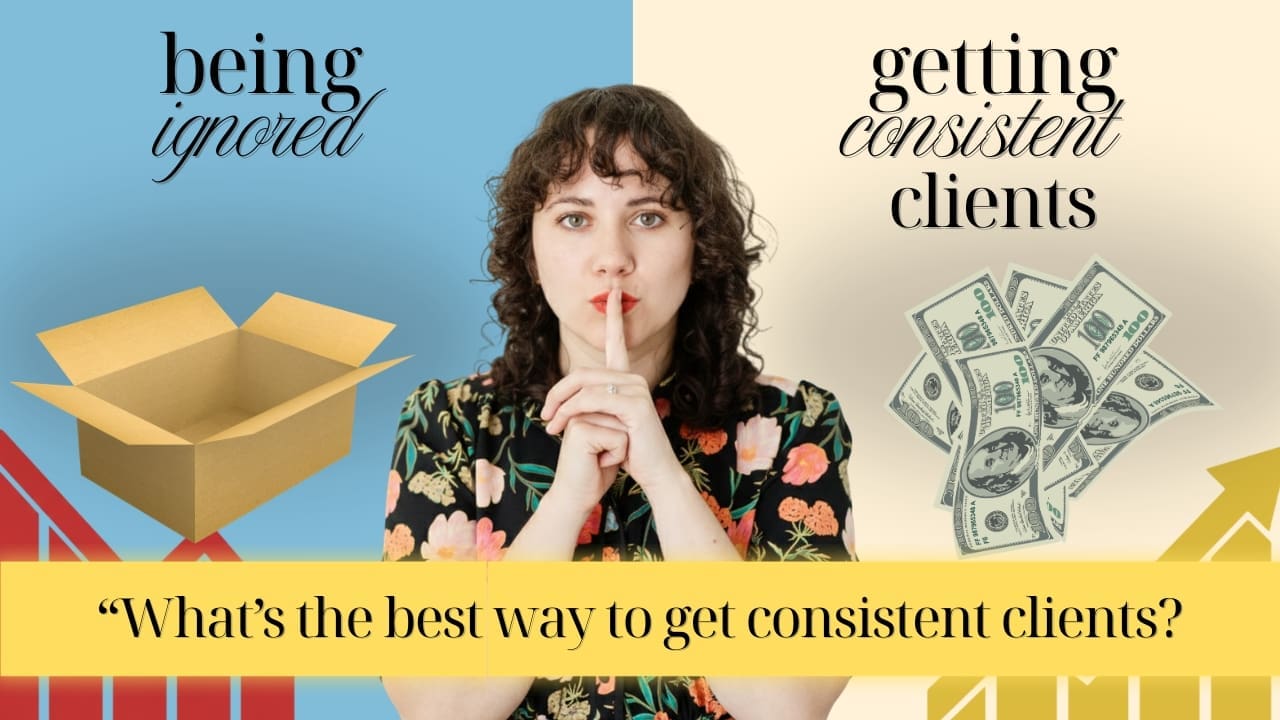
Q1: What’s the Best Way to Get Consistent Clients as a Creative Business?
From Riley C., a graphic designer transitioning into event stationery
Riley has been a full-time graphic designer for nearly 10 years and is ready to make the leap into running a stationery and event branding business full time. She wants to know: where should she focus her marketing energy, and what has actually worked for other stationers in building a consistent stream of clients?
I love this question — and I want to start by telling you something I wish someone had told me earlier.
The Myth of the Silver Bullet Marketing Channel
When I first started Cotton & Bow, I did what most creative entrepreneurs do: I chased platforms. Pinterest wasn’t converting fast enough, so I put more energy into Instagram. Instagram felt slow, so I started looking at bridal shows. Someone in a Facebook group swore that reaching out to planners was the secret, so I tried that too. I was everywhere at once, doing none of it particularly well, and wondering why nothing was gaining traction.
Here’s what I eventually figured out: the platform was never the problem. Every marketing channel I listed worked for someone. The reason none of them were working for me was that I kept moving before I gave any of them enough time to build momentum — and I was spreading myself too thin to do any of them really well.
This is the most common marketing mistake I see creative business owners make. There’s this persistent belief that there’s one magical tactic out there — some channel or strategy that’s the real key — and you just haven’t found it yet. So you keep cycling through options, hoping something clicks.
The truth is so much simpler, and honestly a little anticlimactic: all of them work. Every single one. The question is which one is right for you — and whether you’re willing to commit to it long enough to see results.
The Real Marketing Strategy for Consistent Clients
Here’s the actual answer: pick one marketing channel, master it, and don’t move on until it’s generating at least six figures.
One channel. Done well. Done consistently. That’s the whole strategy.
I know that sounds almost too simple. But I promise you that doing one thing really well will always outperform doing ten things halfway.
15 Ways to Market Your Creative Business
To help you choose, here are 15 marketing channels that genuinely work for creative businesses — stationery designers, photographers, florists, interior designers, artists, and more. This isn’t an exhaustive list, but it covers the ones most relevant to wedding and creative service businesses:
- Pinterest — A powerful long-game platform for visual businesses. Pins have a much longer shelf life than social posts and can drive search traffic for months or even years after you publish them. I still get traffic from pins I created years ago.
- Blogging and SEO — Writing keyword-optimized content that answers the questions your ideal clients are already searching for. Slower to build, but it generates consistent, compounding organic traffic over time. This blog post is an example of exactly that. And now AIO – AI Optimization is part of the strategy too.
- Wedding shows and in-person events — Great for getting in front of buyers face-to-face and making a strong visual impression with your product. If you’re a people person and love the energy of an event, this can be a really natural fit.
- Instagram — Still a strong platform for building brand awareness, showcasing your work visually, and building an audience of followers who convert to clients over time. High competition, but high ceiling if you commit.
- TikTok — Fast-growing reach, especially for behind-the-scenes content, education, and personality-driven storytelling. There’s still lower competition than Instagram in many creative niches, which means more opportunity for newer accounts.
- Reaching out to planners and venues as referral partners — Building direct relationships with wedding planners and venue coordinators who can hand-select you as a recommended vendor for their clients. This is an effective strategy for luxury and high-end creative businesses in particular.
- Selling on marketplaces like Etsy and Amazon — Leveraging existing audiences who are already searching and ready to buy. This is actually how Cotton & Bow got its start — I didn’t have to build an audience from scratch because those platforms already had one.
- Direct to retailers / wholesale — Getting your products carried in boutiques, gift shops, or specialty stores.
- Facebook and Facebook groups — Connecting with ideal clients and industry peers through community-based content and group participation. Still relevant, especially for certain demographics and local markets.
- Conferences and industry networking — Building relationships with peers, potential collaborators, and referral sources in person. This is where a lot of the behind-the-scenes business happens in the wedding industry.
- Podcasting — A long-form content platform for building deep trust with an audience over time. Which is, obviously, exactly why I started this podcast. Guilty.
- YouTube — Video content with strong searchability. A great complement to blogging and SEO for creative business owners who prefer speaking over writing.
- PR and press features — Getting your work featured in publications to build credibility and brand awareness at scale. Cotton & Bow has been featured in Brides, Martha Stewart Living, and People — and there is nothing quite like the credibility boost that comes from a major editorial feature or being quoted as an expert.
- Magazine and print advertising — Paid or organic placements in wedding or lifestyle publications targeting your ideal client demographic.
- Television — Broad reach awareness, typically for larger budgets, but there’s a lot you can do organically to get yourself on local television channels, pitch your own segment or show, audition for reality TV, utilize CTV and GSTV in your local market. I spent nine years at ViacomCBS creating TV campaigns for major brands, so I have a special appreciation for this one — even if it’s a bit old school.
How to Choose the Right Marketing Channel for Your Business
When you’re thinking about which of these is right for you, work through three questions:
1. Where does your ideal client actually spend their time? Think carefully about who you’re trying to attract and how they find vendors. A luxury client who is hiring a high-end wedding planner is not browsing Pinterest hashtags looking for their stationer. That planner is doing the curating for them. Know your client first, and let that drive your channel decision.
2. What can you realistically and consistently show up for? This is the part most marketing advice completely skips over — and it’s honestly the most important factor. I had a period where I tried to build a referral partner strategy with wedding planners. On paper it was the right move. In practice, it required constant outreach, schmoozing at events, and a level of sales energy that I just didn’t want to pursue at that stage of my business. It was initially very successful but fizzled out after I lost the motivation to keep it going. Not because the strategy was wrong, but because it wasn’t right for me at that time.
Pick something you can actually sustain. If you hate being on camera, TikTok is going to feel like torture and you’ll quit within three months. If you’re a natural connector who loves a room full of people, in-person networking might be your best channel. Be honest with yourself. If you’re a writer, launch a substack or blogging might be a better fit for you.
3. What are your competitors already doing successfully? Do competitive research. Look at what other creative businesses in your space are doing — what platforms they’re active on, how often they post, what seems to be working. Don’t be discouraged by competition. If businesses are thriving on a particular channel, that’s proof the channel works. They wouldn’t be there if it didn’t.
A Real-Life Example: Marketing to Luxury Clients
Let’s say your goal is to work with high-end or luxury couples. You might assume Instagram is the obvious place to be — but think about how that client actually finds vendors. They hire a wedding planner, and that planner hand-selects two or three vendors in each category to recommend to their clients. Your potential client never even searches for you.
So the most effective marketing strategy for reaching luxury buyers isn’t posting more content. It’s building relationships with the right wedding planners. That means:
- Following them on social media and engaging genuinely with their work
- Sending a thoughtful introductory email that offers them something valuable — not just asking to be added to a referral list
- Attending the same industry events and conferences they attend
- Sending direct mail pieces that stand out from the stack of vendor emails they already ignore (and offer something valuable)
- Nurturing those relationships over time — holiday gifts, handwritten thank you notes, remembering details about their business
This strategy is incredibly effective when you work it consistently. But it only works if you’re genuinely comfortable with ongoing sales outreach. We’re talking dozens of emails a week, events several times a month, and the kind of relationship maintenance that requires real follow-through. If that sounds exhausting rather than energizing, this is not your channel — and there’s no shame in that. Pick the one that actually fits who you are.
Resources Mentioned in This Episode
📩 Submit Your Question for the Show Have a marketing question you’d like answered on a future episode? Head here and submit it. 👉 marketinganswerspodcast.com/ask
Marketing Answers Podcast is hosted by Jaime Coast, a former Fortune 500 marketing strategist, who picked up a paintbrush and built a successful wedding stationery business. Now she’s helping you grow your creative business by answering your marketing questions.
We’re talking sales, not vibes. Strategy, not manifestation. Each week she will pick questions from real creative businesses to answer with practical advice to move your business forward.


View comments
+ Leave a comment